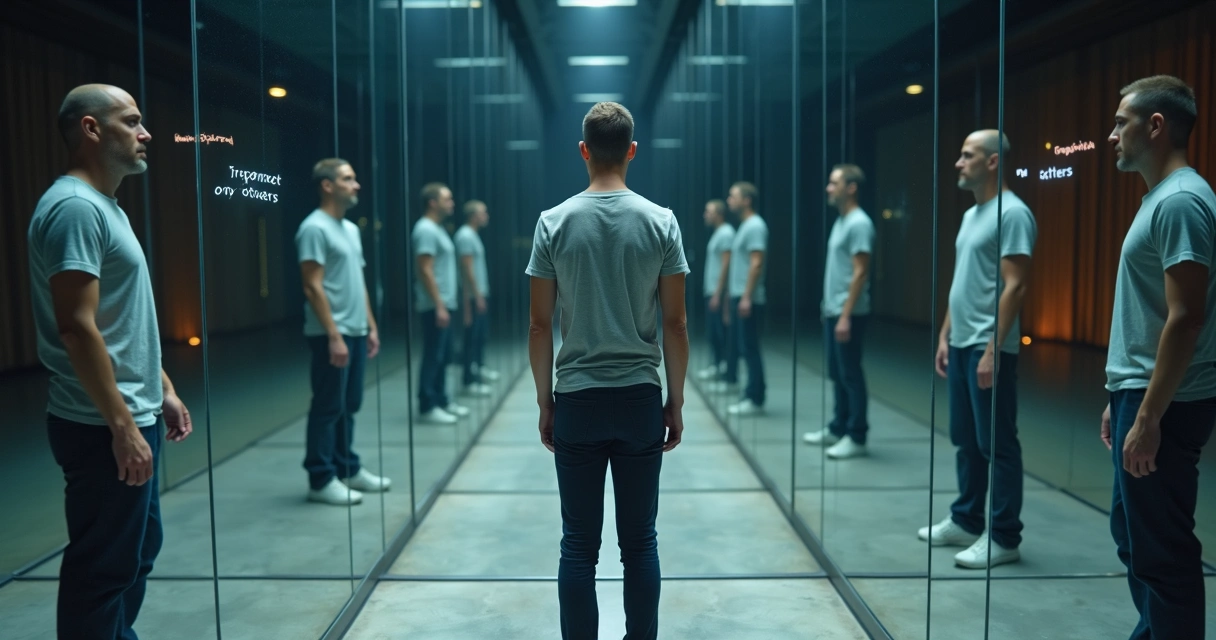


Behavioral neuroscience examines how the nervous system helps shape actions, thoughts, and emotions. It is useful for readers who want to understand learning, habits, motivation, and behavior change without reducing a person to a brain scan. Its central insight is that behavior emerges from brain systems interacting with the body, experience, and situation.
Key takeaways
- Behavior reflects interacting neural systems, not a single “behavior center” in the brain.
- Learning changes how people respond to cues, expected outcomes, and context.
- Brain imaging can reveal associations, but association alone does not prove causation.
- Behavioral neuroscience can inform change, but it does not replace personal, social, or clinical context.
What does behavioral neuroscience explain about behavior?
Behavioral neuroscience studies how biological processes contribute to what people do and experience. It draws on psychology, biology, and neuroscience to connect observable behavior with the nervous system, while recognizing that development and environment also matter. Researchers may examine attention, movement, learning, memory, emotion, motivation, or social behavior.
The field is broader than locating a behavior in one brain region. The National Institute of Mental Health describes research that examines neural circuits alongside cognitive, social, regulatory, and emotional processes, including how these systems develop and interact. That framing helps avoid simplistic claims such as “one brain area causes confidence.”
A more useful question is how a particular behavior changes across situations. For example, someone may find it easy to focus in a quiet room but difficult when tired or under pressure. The behavior reflects a changing interaction among attention, learned expectations, emotional state, bodily needs, and surrounding cues. This systems view also connects to the relationship between neuroscience, consciousness, and behavior change.
How do brain systems turn situations into actions?
Behavior often follows a sequence: a person notices a cue, interprets it using past experience, prepares a response, and adjusts after seeing what happens. This is not a rigid step-by-step command chain. Several neural systems contribute at once, and the same cue can lead to different actions depending on goals, stress, attention, and context.
Consider a phone notification. A person may pause work and check it because previous notifications sometimes brought rewarding or urgent information. If checking regularly brings a useful outcome, that response may become more likely in similar situations. The point is not that one chemical or brain region controls phone use. It is that experience can tune the relationship between cues, expectations, and responses.
Learning and memory research combines behavioral tasks with measures of brain activity and, in some cases, evidence from neurological conditions or stimulation. A review of these methods notes that multiple approaches help researchers investigate memory mechanisms, while also highlighting how difficult it can be to establish cause and effect. Learning about intention, purpose, and neural pathways can add a useful perspective on how goals shape action.
How do researchers test brain-behavior links?
Researchers pair a clearly defined behavior with a method suited to the question. They might measure response time or accuracy during a task, record electrical activity with EEG, use functional MRI to track activity-related changes, or compare behavior before and after a carefully controlled intervention. No single method answers every question.

The design matters as much as the technology. If a study finds that a brain signal changes when people make a choice, that result shows an association. It does not, by itself, establish that the signal caused the choice. Reviews of brain-imaging research stress this distinction. Stronger causal claims require additional evidence, such as interventions or converging results from different methods.
The NIMH’s research priorities specifically include causal experimental designs for probing neural circuits and behavior. This is why a careful study defines the behavior, controls relevant conditions, and avoids interpreting a colorful brain image as a complete explanation of a person.
What can neuroscience tell us about behavior change?
Neuroscience can help explain why repeating an action in a familiar context makes that response easier to retrieve. But brain-based explanations do not mean that behavior is fixed. People can learn new responses, and the conditions around a behavior can be adjusted to make those responses more likely.
For practical reflection, start with one observable behavior rather than a broad label such as “I lack discipline.” Identify when it happens, what tends to precede it, and what immediate result follows. Then test a small change to the cue, setting, or next action and observe whether the behavior shifts. This makes change a process of inquiry, not a verdict about character.
- Describe the action in specific terms.
- Notice the situation, emotional state, and cues around it.
- Choose one realistic alternative response to practice.
- Review what changed, including what made the new response easier or harder.
Attention and emotion are part of this picture, but neuroscience does not turn every useful practice into a guaranteed intervention. A grounded approach to attention and self-regulation treats repeated observation as a skill that can support wiser choices, not as a promise of instant transformation.
How is behavioral neuroscience different from psychology?
Psychology studies behavior and mental processes across many levels, including individual experience, relationships, and social conditions. Behavioral neuroscience is a more biologically focused area that asks how nervous-system processes relate to those experiences and actions. The fields overlap: a good neuroscience study still needs sound psychological questions and reliable behavioral measures.
That distinction matters in practice. A brain measure may help explain part of a response, but it cannot automatically reveal someone’s motives, values, or whole life story. For personal development, biological insight is most useful when integrated with reflection, relationships, and the real conditions in which behavior occurs. Exploring emotional regulation and conscious action can help connect mechanisms with lived experience.
Frequently asked questions
What is behavioral neuroscience?
Behavioral neuroscience studies how the nervous system contributes to behavior, thought, and emotion. It connects observable actions with neural processes, development, and experience. Rather than treating one brain area as a complete explanation, researchers examine how neural systems interact with a person’s body, learning history, and current situation.
Can you give an example of behavioral neuroscience?
An everyday example is studying why a person reaches for a phone after hearing a notification. Researchers might measure how quickly the person responds, change the timing or meaning of the notification, and examine related brain activity. The aim is to test how cues, expectations, learning, and neural processes combine to shape an action.
What is the difference between neuroscience and behavioral neuroscience?
Neuroscience is the broad study of the nervous system, including its cells, circuits, development, and disorders. Behavioral neuroscience focuses more specifically on how biological processes relate to actions and mental functions. It overlaps with psychology, but emphasizes neural mechanisms while still requiring careful measurement of behavior and context.
What does a behavioral neuroscientist do?
A behavioral neuroscientist designs or supports studies linking behavior with nervous-system activity. Depending on their role, they may create experiments, collect behavioral or brain data, analyze results, work with animal or human participants, or teach. Researchers typically combine neuroscience methods with psychology, statistics, and ethical research practices.
How do you become a behavioral neuroscientist?
Yes. Psychology can provide a useful foundation for neuroscience, especially in behavior, cognition, and research methods. Further study may require coursework in biology, chemistry, statistics, and brain science, followed by research experience or graduate training. Requirements vary by program and career, so check individual admissions criteria before planning a route.