


Transformation happens in layers. We often sense this intuitively—whether we’re caught in repetitive patterns, longing for deeper meaning, or aiming for real change. At Coaching Mind Hub, we’ve seen that nurturing conscious maturity isn’t about quick wins. It’s a journey across defined levels, each with its own signs and practical steps. Let’s walk through the 7 levels of conscious maturity, offering a clear roadmap for anyone seeking authentic growth.
The meaning of conscious maturity
When we speak of conscious maturity, we refer not only to age or acquired knowledge, but to an internal evolution—a process where our awareness, emotions, behaviors, and sense of purpose become aligned and integrated. This perspective is central to Marquesan Metatheory of Consciousness and the work we develop at Coaching Mind Hub.
Conscious maturity means having the capacity to perceive, understand, and wisely respond to life’s complexities—not just for ourselves, but for the communities we touch.
True growth starts with inner clarity.
Signs of unconsciousness and the potential for growth
Most people begin their journey not with conscious intention, but with discomfort. That sense of “Is this all there is?” or repeating negative cycles. As we observed, certain signals clearly indicate the earlier stages:
- Blaming others or circumstances for results
- Difficulty regulating emotions
- Feeling disconnected from purpose
- Struggling with change, clinging to old identities
- Frequent conflicts in relationships
- Avoiding responsibility—waiting for life to happen
Recognizing these patterns is the first sign that conscious maturity is possible. It all starts by admitting there is room for development.
The 7 levels of conscious maturity
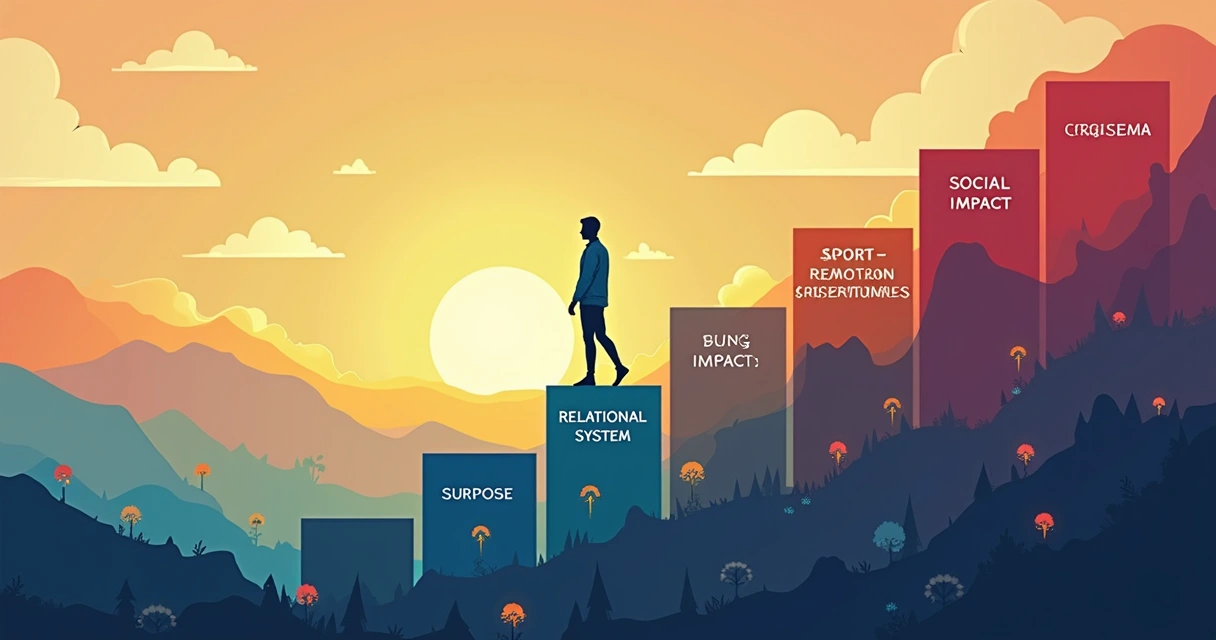
We’ve identified the following 7 levels as markers of progress, each representing a shift in how we perceive ourselves, relate to others, and act in the world. While growth can be non-linear, these stages provide a structured view.
- Reactivity At this starting level, behavior is mostly automatic and shaped by fear, pain, or seeking immediate relief. People here feel life acts “to them,” triggering frustration, anxiety, or anger. Reflection is rare—responses are immediate. Sign: Defensiveness and a sense of victimhood. Step: Begin to notice your emotional reactions.
- Awakening Here, a seed of awareness is planted. Doubt about old patterns emerges, along with the first questions about meaning and responsibility. There’s still confusion, but the search for explanations (even if blaming others) and possibility begins. Sign: Restlessness and curiosity; questioning “why” things happen. Step: Seek knowledge, and observe patterns without judgment.
- Self-responsibility Individuals at this level start owning their feelings, actions, and choices. Rather than externalizing blame, they accept their part in what unfolds. A key insight: change starts within. Sign: Willingness to learn and admit mistakes. Step: Practice taking responsibility for one small area, daily.
- Emotional integration Emotional maturity emerges. Instead of suppressing or being ruled by emotions, people accept, process, and work constructively with them. There’s more empathy and self-regulation. Relationships become stronger, grounded in understanding and forgiveness. Sign: Calm responses, fewer outbursts, steady relationships. Step: Regular self-reflection and mindful communication.
- Systemic consciousness At this level, awareness of the wider systems we belong to—family, work, society—deepens. Actions are seen as ripples affecting others. People recognize inherited patterns and choose which to perpetuate or transform. Interdependence is honored. Sign: Openness to feedback and collaboration, presence in the bigger picture. Step: Notice how your choices impact wider circles.
- Purpose-driven coherence Here, life is lived according to values and authentic purpose. Actions, thoughts, and emotions align. Goals shift from self-centered achievement to service, contribution, and meaning. There’s a deep sense of peace, even when facing challenges. Sign: Consistency between words, actions, and beliefs. Step: Clarify your core values, and let them guide decisions.
- Conscious presence and impact This summit level is marked by a strong sense of identity rooted in consciousness itself. There’s a natural, stable presence—an ability to influence reality through example, compassion, and wisdom. The focus expands to uplifting others and society. Sign: Others feel inspired by your presence. You feel grateful and connected. Step: Use your awareness to nurture, listen, and guide those around you.
How to progress: Steps for each level
We’ve seen that while everyone’s journey is personal, specific practices can nurture advancement through the levels:
- Commit to self-inquiry—ask why you react the way you do
- Embrace feedback—not as criticism, but as a window for growth
- Adopt meditation or mindfulness—bringing clarity to thought and emotion
- Seek meaningful connection—relationships are mirrors and teachers
- Reflect on your impact—how do your actions shape the world around you?
Sometimes, we resist growing because it challenges our comfort zone. Staying with discomfort, rather than fleeing from it, is often what unlocks the next stage. In our work with Coaching Mind Hub, we reinforce that there are no shortcuts—progress comes from small consistent changes and honest reflection.

The role of frameworks and support
Just as no one climbs a mountain alone, growing through the levels of consciousness is easier with guidance, frameworks, and sometimes, a supportive community. Structures like the Marquesan Metatheory of Consciousness—used at Coaching Mind Hub—offer both clarity and safe space to process each level.
What matters is not where you start, but your willingness to notice, learn, and try again.
The path is yours, but you’re not alone.
Integrating conscious maturity in daily life
Theory is one side. Real change shows in everyday moments. Whether we’re facing a difficult conversation, making a big choice, or sitting quietly with ourselves, these levels invite us to ask: Am I reacting or responding? Am I seeing only myself or the greater whole? How can I bring more presence and kindness into this moment?
At Coaching Mind Hub, we have witnessed that living at higher stages is not about perfection. It’s about presence, purpose, and honest self-examination. Progress looks different for everyone, but the effects—more meaningful relationships, authentic fulfillment, positive impact—are real and measurable.
Conclusion
As we reflect on the 7 levels, it’s easy to see where we repeat old loops, and where we can step forward. Maturity is not a finish line. It’s the art of conscious living, one choice at a time. If you’re ready to start this journey or guide others along it, Coaching Mind Hub offers research, community, and frameworks that support lasting transformation. Let’s build a future built on awareness and care—starting inside ourselves today.
Frequently asked questions
What are the 7 levels of conscious maturity?
The 7 levels, as we have mapped at Coaching Mind Hub, are: Reactivity, Awakening, Self-responsibility, Emotional integration, Systemic consciousness, Purpose-driven coherence, and Conscious presence and impact. Each level reflects a step forward in awareness, emotional skill, and purpose.
How can I reach a higher maturity level?
The path to higher maturity involves honest reflection, accepting responsibility, and consistently applying practices like mindfulness and conscious communication. Growth is gradual—focus on small, daily actions that foster self-awareness and empathy.
What are the signs of conscious maturity?
Some clear signs are the ability to take responsibility for feelings and actions, steady emotional responses, empathy, purpose-driven choices, openness to feedback, and a genuine sense of connection to others and the world.
Is conscious maturity worth working towards?
Yes. Advancing in conscious maturity brings deeper peace, more authentic relationships, and a stronger capacity to influence your life and surroundings positively. It leads to sustainable growth, both personally and for those you affect.
How do I know my current maturity level?
Discovering where you stand starts with observing your thoughts, reactions, and patterns in real-life situations. Regular self-reflection and seeking feedback from trusted sources can reveal your habitual level and highlight where to focus next.